2026-10-25 · Rick Morales
Winter Pipe Bursts And Resulting Biohazards In Littleton Basements
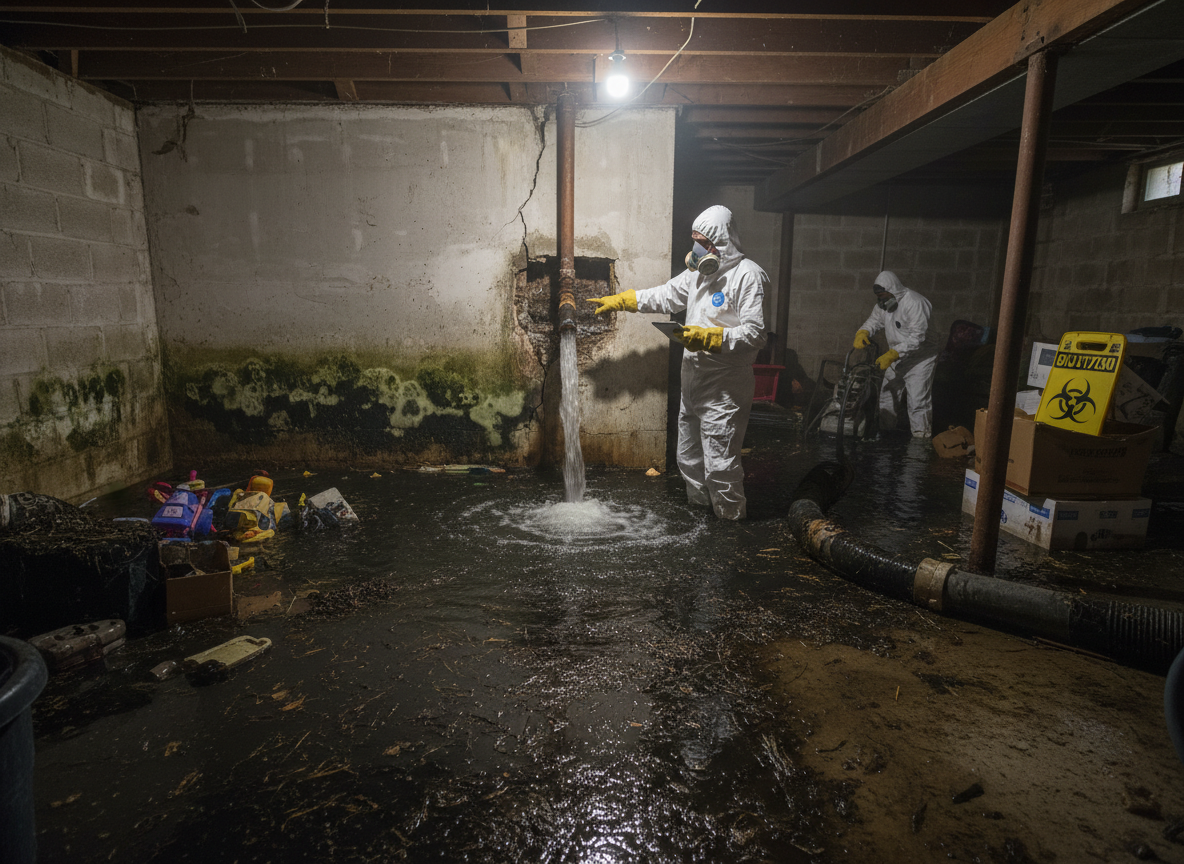
Winter pipe bursts in Littleton basements frequently turn into biohazard situations when frozen lines crack and release water that contacts sewage lines or standing waste. Arapahoe County homes built before 1980 often have cast iron or galvanized pipes that fail during the first hard freeze after low-humidity autumns. Once water reaches floor drains or sump pits, contamination spreads quickly across concrete slabs common in Southpark and Bowles neighborhoods.
How Littleton Winters Trigger Pipe Failures
Semi-arid conditions with four distinct seasons bring sharp temperature drops that catch older homes off guard. In Historic Littleton and Downtown Littleton, many basements sit below the frost line yet still experience pipe bursts when overnight lows hit single digits. Low humidity accelerates heat loss through uninsulated walls, making 40-gallon water heaters and supply lines in 1950s-1970s housing stock especially vulnerable. Residents in Wolhurst and Sterne Park report repeated failures near exterior walls where soil shifts from freeze-thaw cycles stress joints.
Biohazard Risks When Water Meets Waste
Burst pipes that reach floor drains introduce fecal matter and urine into the standing water, turning a water loss into a regulated biohazard event. In Columbine homes with finished basements, carpet and drywall absorb contaminated moisture within hours, creating hidden mold and bacteria growth. The low-humidity air does not dry surfaces fast enough to prevent odor penetration into HVAC returns. sewage backup cleanup protocols become necessary once testing confirms pathogens beyond simple gray water.
Steps for Safe Basement Assessment
Technicians begin by isolating the affected zone with containment barriers before any removal. They test moisture levels in slab cracks common to Southpark properties and map how far contamination traveled toward adjacent rooms. All porous materials within 18 inches of visible water lines are removed and bagged for disposal. feces and urine biohazard cleanup follows when black water indicators appear in the sample results.
Drying and Disinfection Realities in Arapahoe County
High-powered air movers must run 72-96 hours in low-humidity winter air to reach below 15 percent moisture content in concrete. Englewood and Highlands Ranch crews often add supplemental heat because outdoor temperatures stay below freezing for days. biohazard disinfection service applies EPA-registered agents to all remaining surfaces after extraction. Homes near Hudson Gardens and Littleton Museum face extra challenges when groundwater tables rise after snowmelt and re-contaminate cleaned slabs.
When to Call for Professional Bio Hazard Cleanup
Any visible sewage odor or discoloration after a pipe burst requires immediate professional evaluation rather than DIY attempts. Littleton rules limit residential disposal of contaminated materials, directing owners to licensed transporters. Littleton Rules For Disposing Of Biohazardous Waste From Residential Properties outlines proper documentation for Arapahoe County properties. Cost Factors For Bio Hazard Cleanup In Littleton Colorado details how basement square footage and material type affect project scope in neighborhoods like Bowles and Sterne Park.