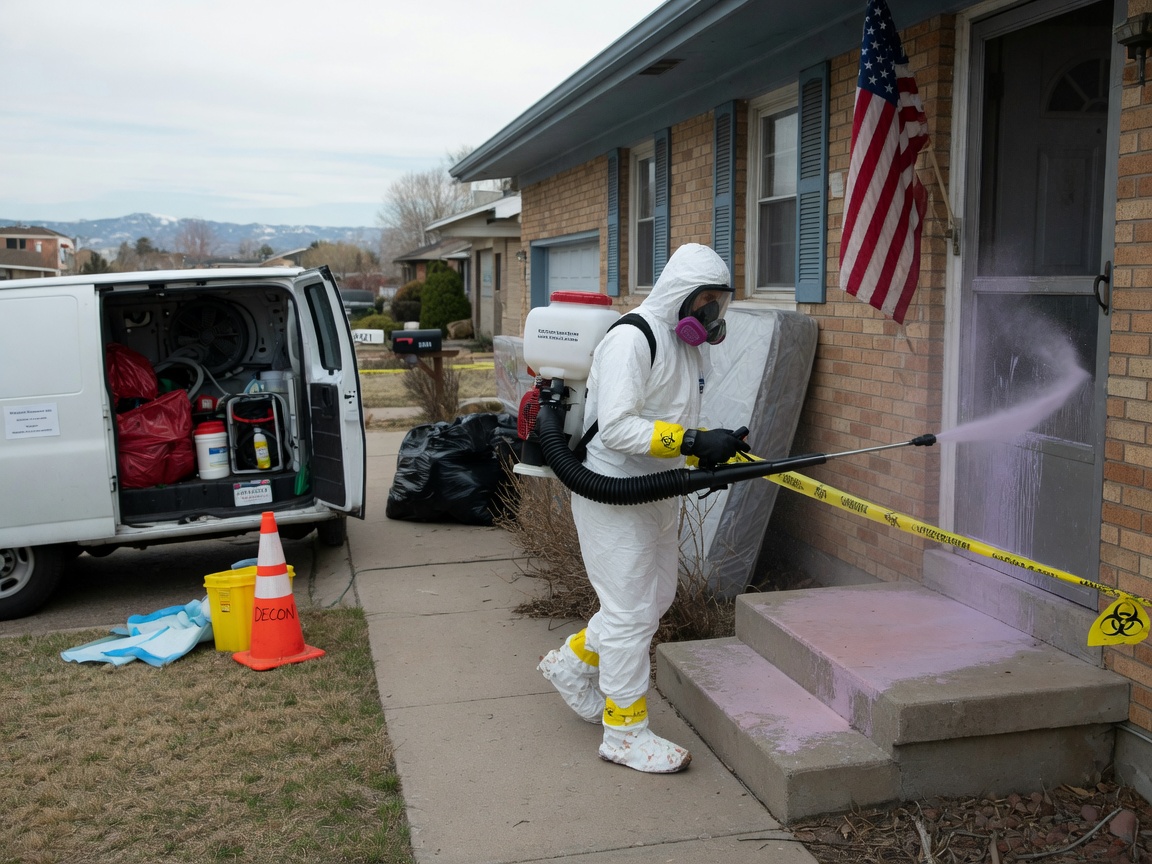
In Littleton homes built before 1970 in Historic Littleton and around Bemis Public Library, biohazard disinfection often involves layered contamination where animal waste or sewage from backups has seeped into original plaster and subfloors. Low humidity in the semi-arid climate lets residues dry and become airborne during removal, requiring negative air machines and HEPA filtration before any surface work begins. Technicians must also account for seasonal swings, as spring snowmelt and summer monsoons push groundwater higher near Sterne Park and Wolhurst, increasing basement intrusion risks.
Sewage backup cleanup in neighborhoods like Columbine and Bowles frequently intersects with hoarding situations where blocked drains have gone unnoticed for months. The four distinct seasons create repeated moisture cycles that allow bacteria to migrate into wall cavities and HVAC returns, especially in single-story ranches common near Littleton Town Hall. Disinfection protocols here include full removal of affected insulation and repeated applications of hospital-grade agents followed by ATP testing to confirm reduction before reassembly.
Edge cases arise near Hudson Gardens and Southpark where properties sit on clay-heavy soils that retain moisture longer after heavy rains, prolonging odor and pathogen survival. Crews working these jobs coordinate with Arapahoe County health guidelines on waste disposal and often extend containment zones into attached garages or crawlspaces that older Denver-adjacent homes frequently have. Proper sequencing prevents cross-contamination during transport through tight hallways typical of Downtown Littleton properties.
Technician insight
In Littleton the thing that catches most people out with biohazard disinfection service is how the semi-arid climate lets dried sewage or hoarding residues hide in baseboards until a humid spell from a nearby Highlands Ranch storm front reactivates them; older plaster in Historic Littleton homes then wicks the moisture upward and spreads the problem into ceilings.
Sewage Intrusion After Spring Melt
A basement in a 1960s home near Sterne Park had repeated backups from clay soil drainage issues. We found bacterial growth extending into subflooring and HVAC ducts that the dry winter air had concealed. Containment was set, affected materials removed, and repeated disinfection cycles applied until testing cleared the space for safe use.
Biohazard Disinfection Service Services We Offer
✓Hoarding Cleanup Disinfection
Removes accumulated waste and applies targeted disinfectants in hoarded Littleton properties to restore safe living conditions without spreading contaminants to adjacent rooms.
✓Sewage Backup Disinfection
Neutralizes pathogens from raw sewage intrusions common after storms in Arapahoe County basements, including full extraction and surface treatment to prevent recurring odors.
✓Trauma Scene Sanitization
Cleans and disinfects areas affected by blood or bodily fluids while protecting surrounding finishes in older Historic Littleton homes.
✓Infectious Waste Removal
Safely extracts and disposes of contaminated materials from properties near Englewood and Highlands Ranch following exposure events.
✓Odor Elimination Treatment
Addresses embedded biohazard odors in HVAC systems and porous materials using methods suited to Littleton's dry air that can otherwise mask lingering issues.
How it works
- 1
Initial Assessment
Inspect affected zones in the specific Littleton neighborhood to map contamination extent and identify hidden moisture pockets created by local soil and climate patterns.
- 2
Containment Setup
Establish barriers and negative pressure to protect unaffected areas of the home, especially important in compact layouts found around Downtown Littleton.
- 3
Removal and Disinfection
Extract waste, apply EPA-registered agents, and repeat treatments as needed for sewage or hoarding residues common after seasonal weather shifts.
- 4
Verification and Clearance
Perform surface testing and odor checks before releasing the space, confirming conditions meet health standards for re-entry.
Pricing
Cost depends on square footage affected, depth of contamination, and whether multiple rooms or HVAC systems require treatment; 24/7 assessments available.