Littleton homes built before 1980 in Historic Littleton and Wolhurst often feature vented crawl spaces and attic voids where wildlife enters during the dry winter months. Once temperatures drop in the semi-arid climate, animals seek warmth and moisture inside wall cavities or under insulation. When death occurs, decomposition fluids seep into subflooring and joists, creating persistent odors that travel through HVAC returns common in these older builds. Proper removal requires cutting access panels, extracting remains without spreading fluids, and treating affected wood with enzyme solutions rather than simple sprays.
In neighborhoods like Columbine and Southpark, summer monsoons can saturate soil around foundations, pushing rodents and raccoons into dryer interior spaces. The low humidity of Arapahoe County then accelerates mummification, locking odors inside insulation until disturbed by renovations. Technicians must map odor migration paths using moisture meters and borescopes before any demolition, especially in split-level homes near Hudson Gardens where additions create hidden pockets between original and newer framing.
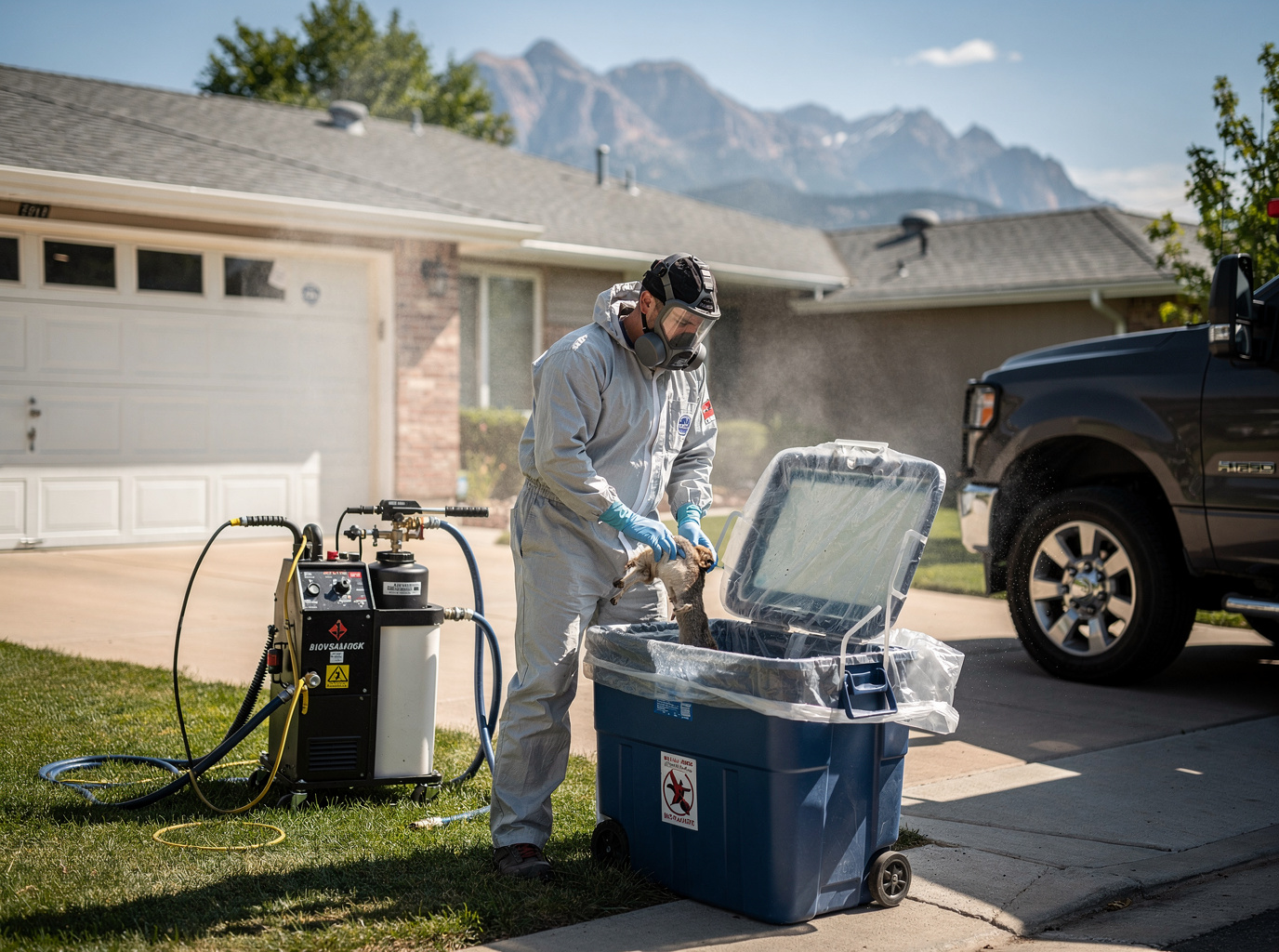
Disposal follows Arapahoe County guidelines for biohazard waste, requiring double-bagging and transport to approved facilities rather than standard landfill routes. Odor neutralization often involves hydroxyl generators run for multiple days in sealed rooms to break down volatile compounds that standard ozone units miss in low-humidity air. Homeowners in Bowles frequently report failed DIY attempts that push odors into adjacent living spaces when fans are used without containment barriers.
Technician insight
In Littleton the thing that catches most people out with dead animal removal and odor removal is older crawl spaces in Bowles and Wolhurst homes. The semi-arid winters dry out carcasses fast so the smell stays trapped until someone opens a vent or starts a remodel, then it moves through the whole house. We see this every season when owners try bleach first and only make the odor travel farther into finished spaces.
Hidden Carcass in Southpark Attic
A homeowner in Southpark noticed a strong odor near the HVAC return after a warm spell. Inspection revealed a mummified raccoon lodged between insulation and ductwork above the garage. We removed the remains, treated the saturated insulation and joists, then ran hydroxyl equipment for 48 hours to clear the odor from connected living areas.
Dead Animal Removal and Odor Removal Services We Offer
✓Attic Dead Animal Removal
Locate and extract carcasses from insulation and truss voids common in Littleton ranch homes, then replace contaminated material to stop odor migration into living areas.
✓Crawl Space Decontamination
Remove remains and treat soil and joists in vented crawl spaces found throughout Historic Littleton and Wolhurst where dry conditions preserve odors for months.
✓Wall Cavity Odor Elimination
Access and clean inside exterior walls of older Bowles and Columbine homes where animals die between studs and fluids soak into drywall.
✓Rodent Nest and Carcass Cleanup
Clear nests and multiple carcasses from attics and garages in Southpark properties, followed by enzyme treatment to neutralize urine and decomposition smells.
✓Decomposition Fluid Extraction
Remove stained subflooring and treat joists in Downtown Littleton properties where fluids have penetrated through carpet and padding into wood.
How it works
- 1
Site Assessment
Inspect affected areas in the home using inspection cameras and moisture detection to map carcass location and fluid spread without unnecessary demolition.
- 2
Safe Removal
Extract remains using containment protocols and double-bag for county-approved disposal while protecting HVAC systems from cross-contamination.
- 3
Cleaning And Treatment
Apply enzyme cleaners to all affected surfaces and run air treatment equipment to break down remaining odor molecules in low-humidity conditions.
- 4
Final Verification
Test air quality and surfaces before returning access to living spaces, confirming no residual odors remain in connected rooms.
Pricing
Cost depends on access difficulty, number of locations, and extent of fluid damage; upfront quotes provided after inspection.